
By Karen Phelps
This article was originally published in Business Rural North – Winter 2026 Edition by Waterford Press.
Efficiency is increasingly recognised as one of the most critical challenges facing New Zealand’s beef sector, and for Mahuta Polled Hereford Stud it sits firmly at the heart of its breeding philosophy with an upcoming bull sale on 10 September.
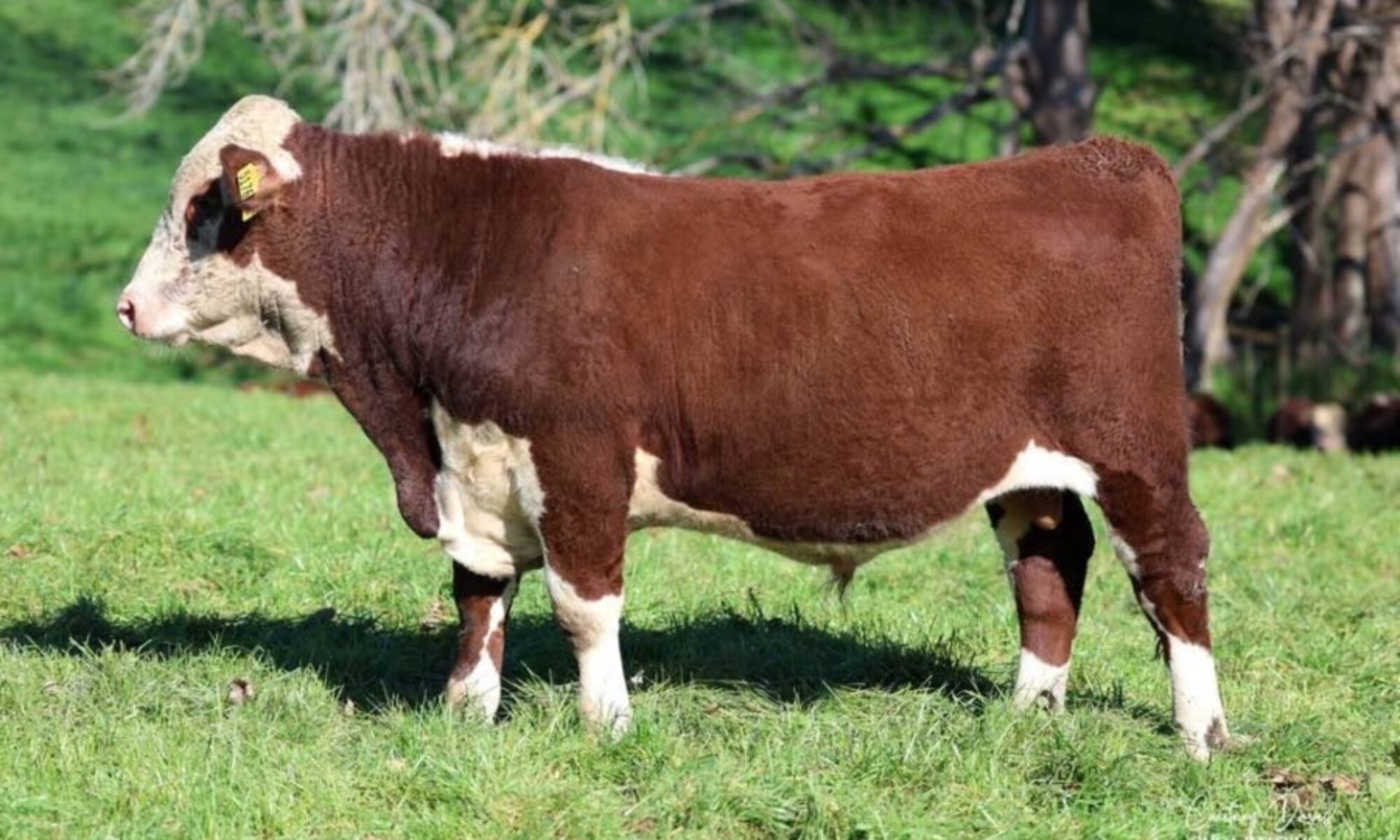
Based south of the Bombay Hills and owned by John and Mary Allen, the stud has spent more than four decades refining a programme focused on producing cattle that convert grass into high-quality beef as efficiently as possible.
High calf survival, strong fertility and a condensed calving period are all central to that goal, alongside the ability to finish animals quickly and with minimal inputs.
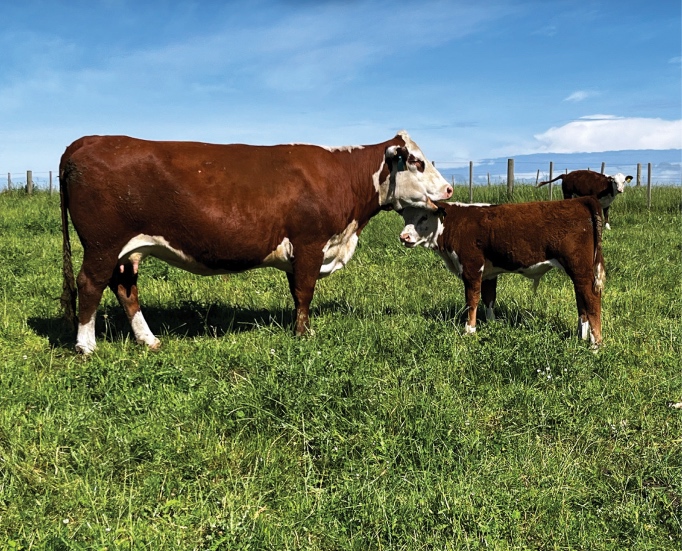
“We are aiming to breed the best animals in terms of converting grass to meat and for that meat product to be of the highest quality,” says John. “It goes without saying that good beef animals have to be structurally correct. An animal which breaks down is inefficient on multiple levels.”
He says studies in the United States have shown Herefords to be particularly effective at converting pasture into beef and Mahuta has built on that advantage by selecting for traits that reduce maintenance and environmental impact.
“We also aim for lower mature cow size which means lower maintenance – less feed and fewer greenhouse gases,” says John. “Cattle which finish earlier spend less time on farm, which again improves efficiency across feed use, emissions and overall cost.”
Another key trait is calving ease: “Dead calves are inefficient and calves requiring assistance cost time, money and lost production,” says John. “We aim for as much growth as our calving ease limitations will allow while also selecting for negative gestation to give cows more days in milk.”
He says Mahuta’s long-standing focus on fertility and performance is evident in its herd, which consistently achieves days-to-calving figures well above the breed average. Carcass traits are equally important with emphasis placed on animals that deliver higher dressing-out percentages and strong eating quality.
“Intramuscular fat dictates eating quality and means the carcass is likely to attract a premium, which increases profit per animal,” says John. “That is efficiency in its simplest form.”
These principles are reflected in recent genetic investments including the purchase of Matariki Performer P24 and Colraine Washington 23 421, the latter setting a spring sale record of $37,000 for a yearling bull. The first progeny of both sires will feature in this year’s sale.
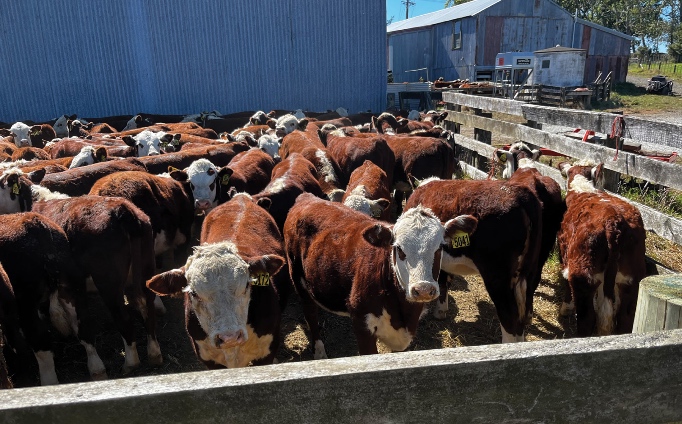
“These additions mean we are investing in the most productive genetics we can find, which in turn means the bulls we sell have higher-end productive potential and therefore profitability,” says John
Both sires rank highly across key performance indicators, including calving ease, growth and intramuscular fat, and sit in the top one per cent for beef heifer index, a combined measure of profitability.
“EBVs are an estimate of productive potential while indexes estimate dollar profitability,” says John. “Being in the top one per cent gives a strong indication of the value these bulls can deliver in a commercial system.”
At its on-farm sale, with online bidding available via Bidr, the stud will present its top line-up of yearling bulls bred specifically for heifer mating.
Source Reference:
Phelps, K. (2026, May 15). Efficiency key to its breeding philosophy. Business Rural North, Winter 2026, 24-25. https://digitalpublications.online/waterfordpress/business-rural-north-winter-26/24/